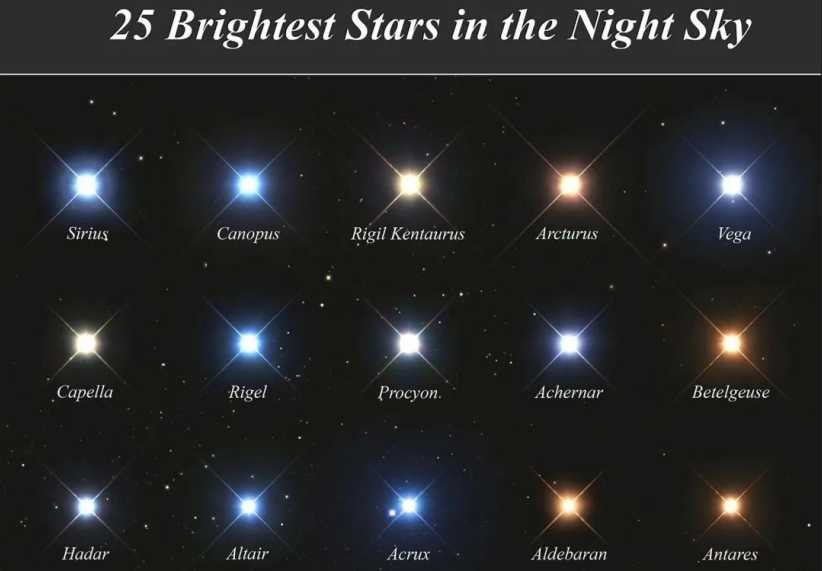
The Brightest Stars in the Night Sky: IAU-Named Icons and Their Ancient TalesThe Brightest Stars in the Night Sky: IAU-Named Icons and Their Ancient Tales
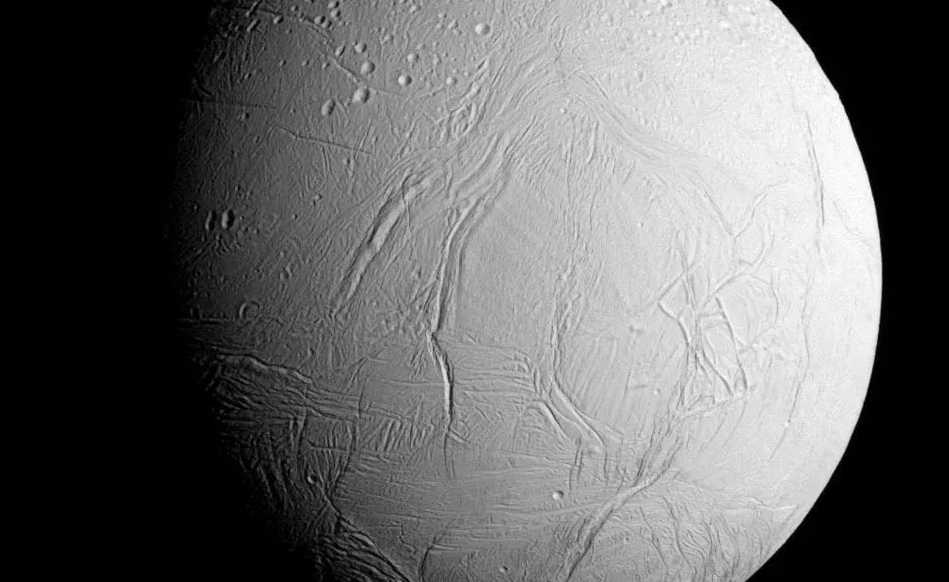
Saturn’s Enceladus: Does an Ocean beneath Ice Harbor Life?Saturn’s Enceladus: Does an Ocean beneath Ice Harbor Life?
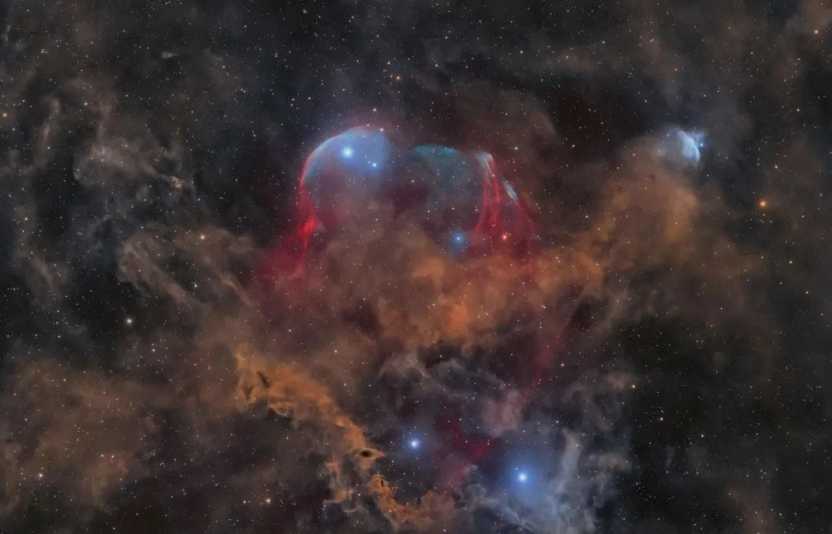
First-Ever Capture of Supernova Remnant G115.5+9.1: A Cosmic Duo Named After Mythological MonstersFirst-Ever Capture of Supernova Remnant G115.5+9.1: A Cosmic Duo Named After Mythological Monsters
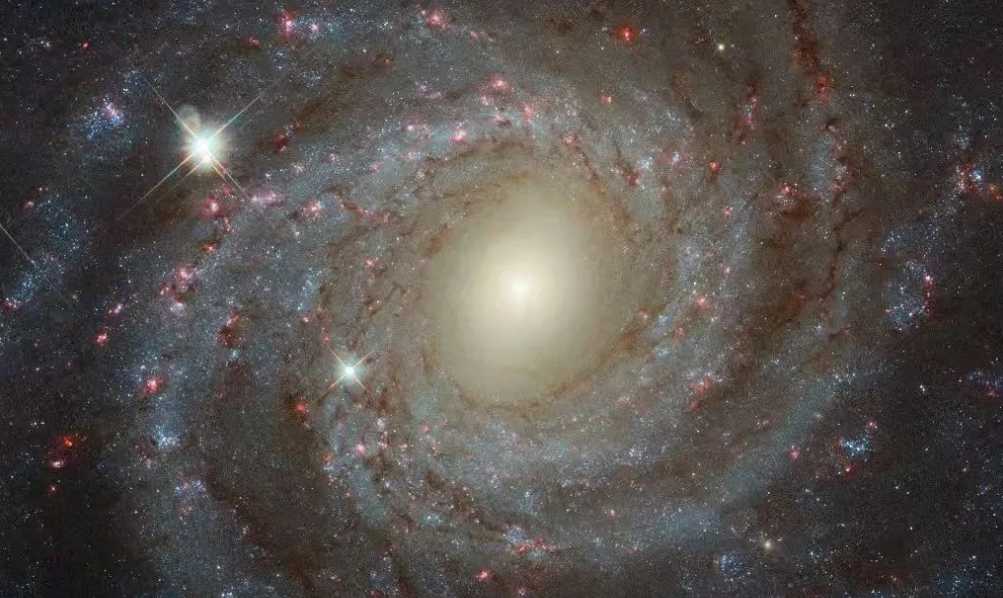
NGC 3344: A Face-On Spiral Galaxy Unveiled in Hubble’s Multispectral GlowNGC 3344: A Face-On Spiral Galaxy Unveiled in Hubble’s Multispectral Glow
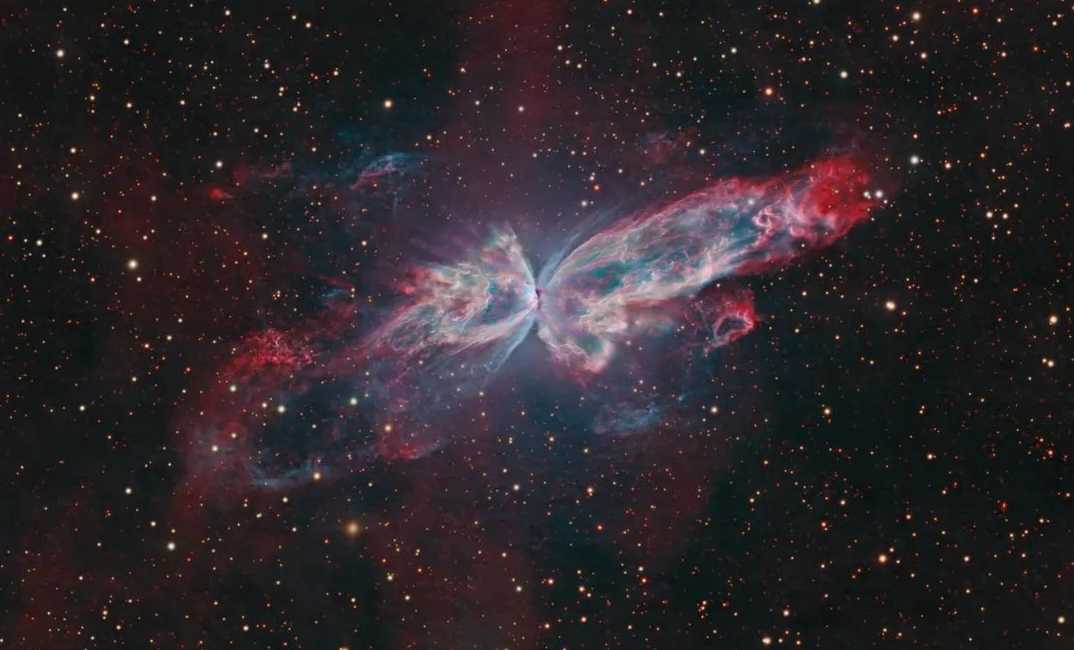
The Butterfly Nebula (NGC 6302): A Fiery Cosmic Chrysalis in ScorpiusThe Butterfly Nebula (NGC 6302): A Fiery Cosmic Chrysalis in ScorpiusNGC 6302, a planetary nebula nicknamed the "Butterfly Nebula," lives up to its floral-insect moniker with wing-like gas plumes spanning 3 light-years. Located 4,000 light-years away in Scorpius, this stellar corpse showcases the dramatic final act of a massive star—now a 250,000°C central star evolving into a white dwarf, its ultraviolet radiation ionizing the surrounding nebula into a kaleidoscopic display.
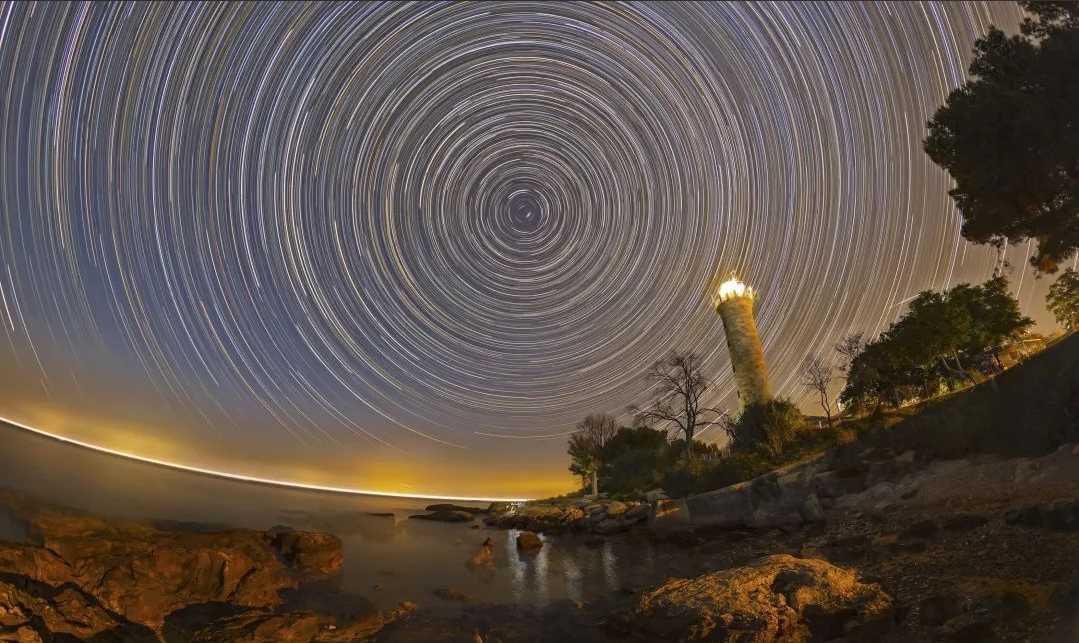
Savudrija Lighthouse and Celestial Star Trails: A Timeless Navigation PortraitSavudrija Lighthouse and Celestial Star Trails: A Timeless Navigation PortraitThe historic Savudrija Lighthouse shines along the northern coast of Istria Peninsula in this masterful night-sky composition. Built in the early 19th century, the beacon has guided Adriatic sailors for centuries, its beam contrasting with the ancient navigational icon above: Polaris, the North Star. In the image, Alpha Ursae Minoris traces the shortest arc around the North Celestial Pole—the cosmic pivot of Earth’s axis—at the center of concentric star trails.
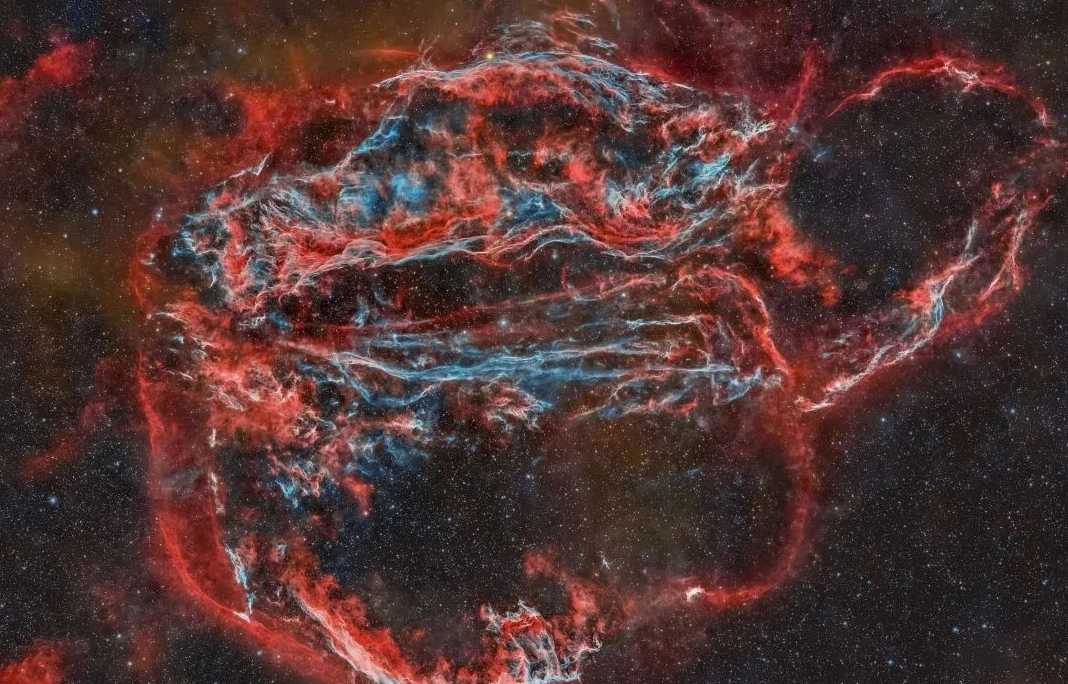
The Veil Nebula: Cosmic Relic of a Supernova That Lit the Ancient SkyThe Veil Nebula: Cosmic Relic of a Supernova That Lit the Ancient SkyThese ethereal wisps are the last observable remains of a star that perished in a supernova explosion ~7,000 years ago, giving birth to the Veil Nebula. When the star detonated, its expanding gas cloud shone as brightly as a crescent Moon, lingering in Earth’s sky for weeks during humanity’s prehistoric era. Today, this supernova remnant—known as the Cygnus Loop—has faded, visible only through small telescopes pointed at the constellation Cygnus.
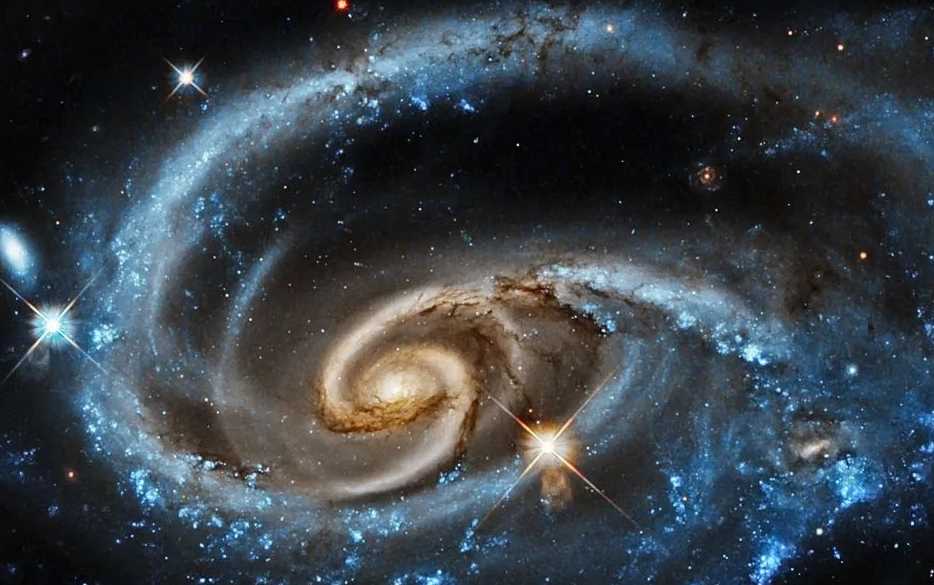
Arp 273: A Cosmic Love Story of Colliding Galaxies in AndromedaArp 273: A Cosmic Love Story of Colliding Galaxies in AndromedaWhat’s happening to this spiral galaxy? The answer lies in its violent tango with a neighboring dwarf galaxy. At the center of this image, UGC 1810 forms the Arp 273 galaxy pair with its collision partner, showcasing a cosmic drama where gravity reshapes stellar landscapes. The most striking feature—UGC 1810’s outer blue ring—betrays the chaos of their gravitational battle, while the smaller companion galaxy appears distorted in the embrace.
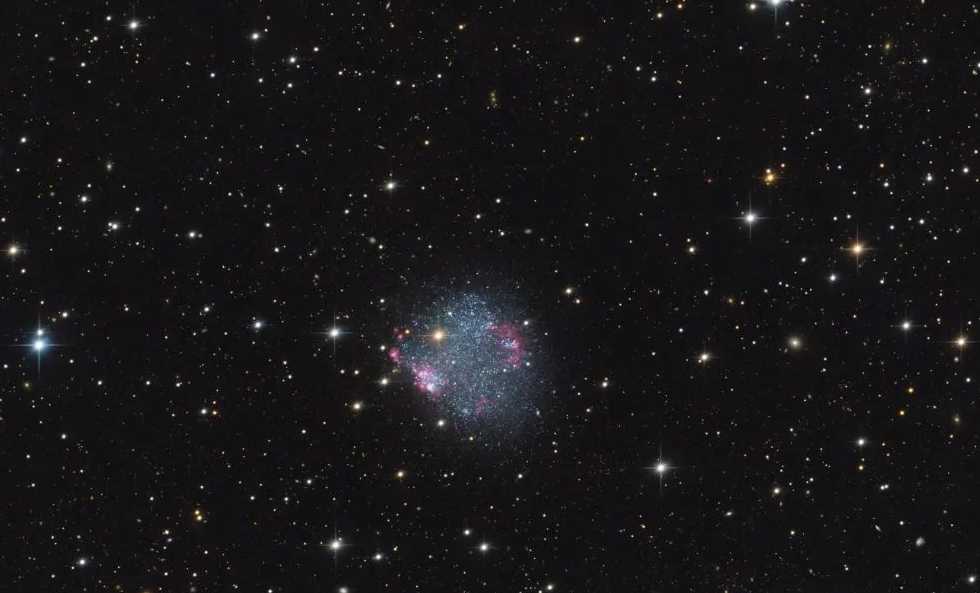
Sextans A: The Cosmic Underdog Where Stars Bloom in Ambery ClustersSextans A: The Cosmic Underdog Where Stars Bloom in Ambery ClustersWhile grand spiral galaxies steal the limelight with symmetric arms and glowing star nurseries, the irregular dwarf galaxy Sextans A weaves its own stellar saga in the cosmic periphery. Just 5,000 light-years across, this galaxy hosts young star clusters and star-forming regions like amber-like clumps suspended in space, blooming 4.5 million light-years away in the constellation Sextans. As a sentinel on the Local Group’s fringe, it stands distant from the galactic family including the Andromeda Galaxy and the Milky Way.
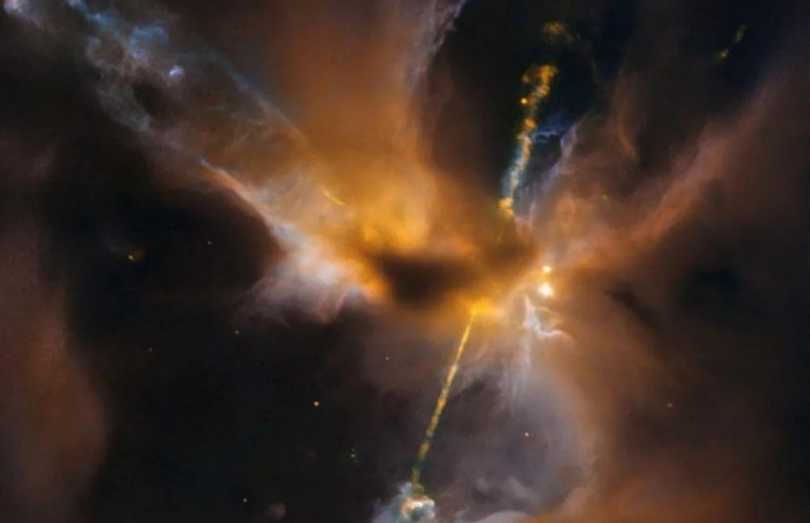
HH 24: The Cosmic 'Lightsaber' Jet from a Newborn Star in OrionHH 24: The Cosmic 'Lightsaber' Jet from a Newborn Star in OrionResembling a double-bladed lightsaber, this stunning Hubble Space Telescope image captures Herbig-Haro 24 (HH 24)—a half-light-year-wide jet erupting from a newborn star in the Orion B molecular cloud complex, ~1,300 light-years (400 parsecs) from Earth. HH 24 exemplifies the violent beauty of star birth, where invisible forces carve luminous pathways through interstellar space.
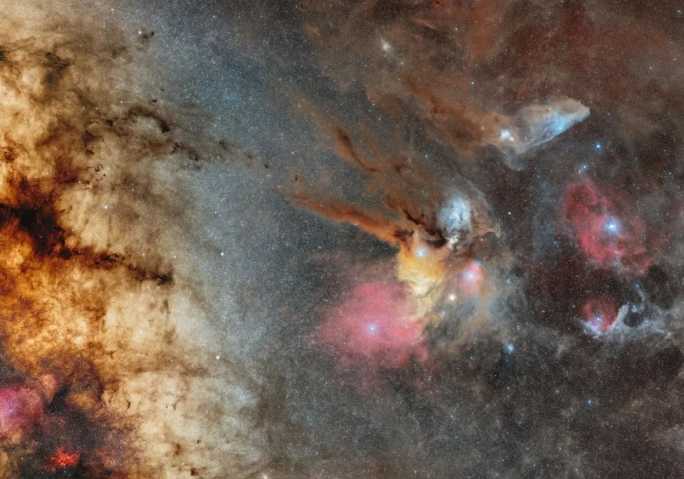
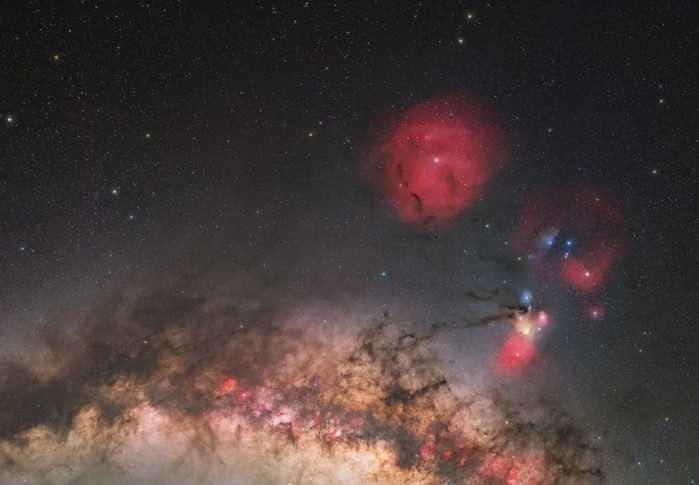
The Milky Way’s Most Beautiful Portrait: A 17-Hour Exposé of Cosmic SplendorThe Milky Way’s Most Beautiful Portrait: A 17-Hour Exposé of Cosmic SplendorStargazers and astrophotographers alike hail this deep-sky masterpiece as the Milky Way’s most stunning portrait. The image anchors viewers with a diagonally streaming galactic band in the lower-left, intersecting the vibrant Rho Ophiuchi Nebula at its center. Above, the dazzling red nebula of Zeta Ophiuchi floats like a cosmic flame, creating a triad of celestial wonders.
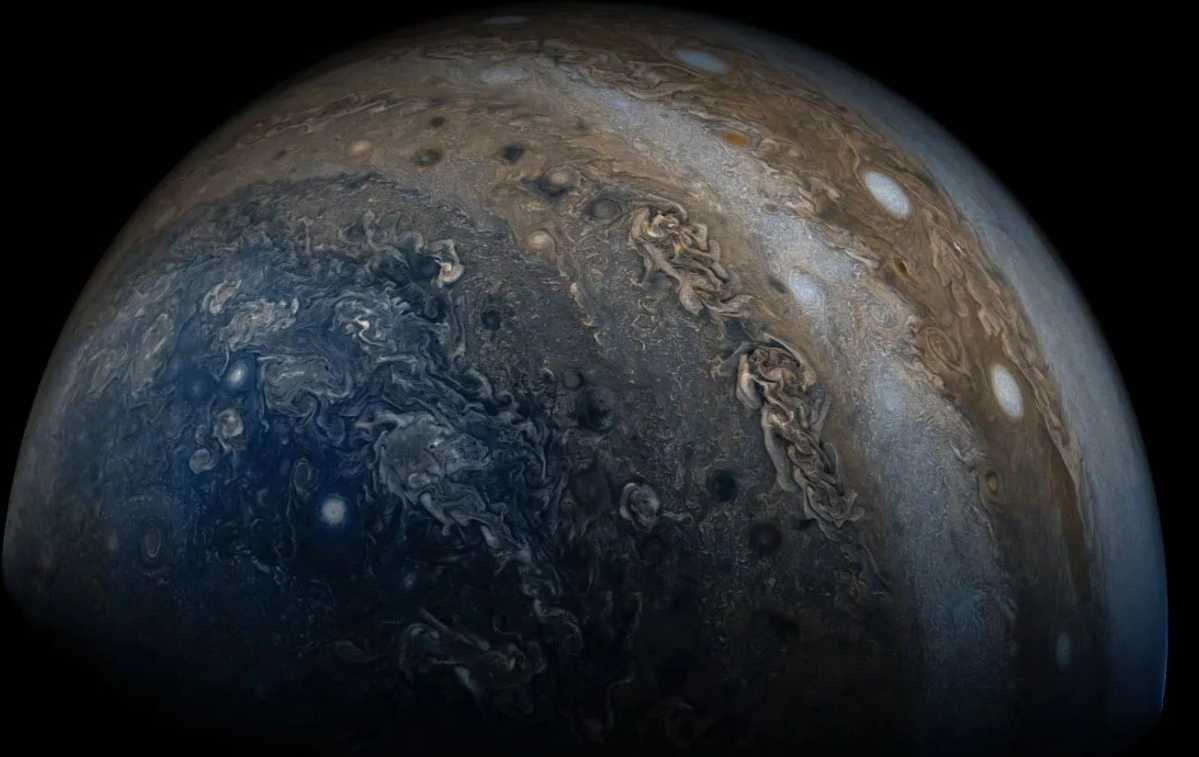
Jupiter’s Cosmic Wonders Unveiled by Juno: From Swirling Clouds to a Mysterious CoreJupiter’s Cosmic Wonders Unveiled by Juno: From Swirling Clouds to a Mysterious CoreNASA’s Juno spacecraft, on its highly elliptical orbit around Jupiter, has completed over 70 close flybys, revealing the gas giant’s secrets. A 2017 image captured from below Jupiter’s equator shows horizontal cloud bands transforming into spectacular swirling vortices and intricate patterns, with a "string of pearls" array of white oval cloud formations near the equator. These views challenge all prior conceptions of Jupiter’s atmospheric dynamics.
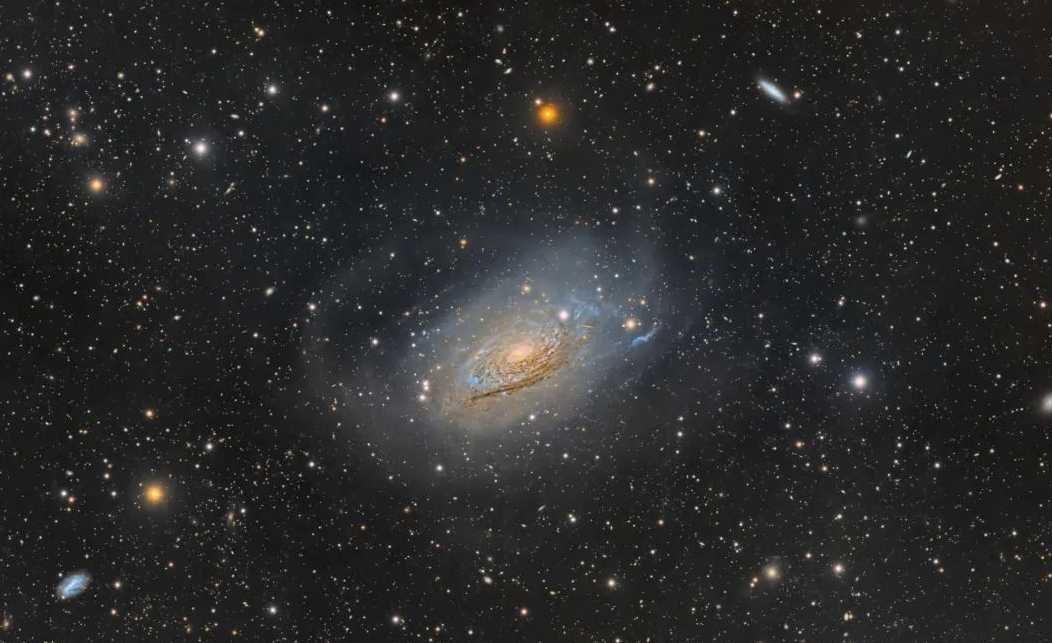
M63 (The Sunflower Galaxy): A Cosmic Sunburst in Canes VenaticiM63 (The Sunflower Galaxy): A Cosmic Sunburst in Canes VenaticiThe bright spiral galaxy M63 (NGC 5055) shines in the northern sky, a mere 30 million light-years from Earth in the constellation Canes Venatici ("the Hunting Dogs"). Spanning ~100,000 light-years—comparable to the Milky Way—its luminous core and grand spiral arms earned it the nickname "Sunflower Galaxy," a nod to its petal-like structure in deep exposures.
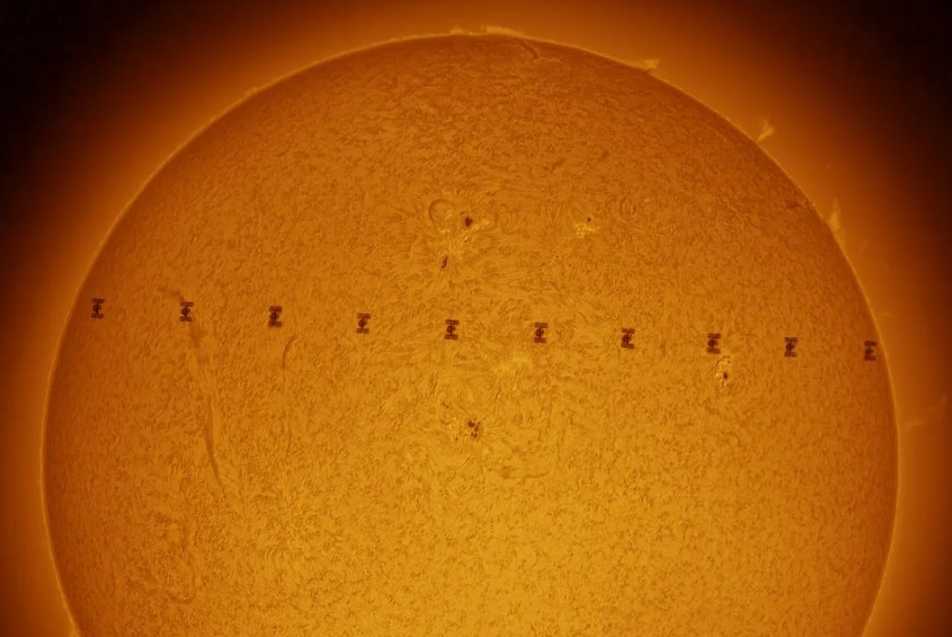
The International Space Station Transit: A Fleeting Solar SpectacleThe International Space Station Transit: A Fleeting Solar SpectacleWhen the International Space Station (ISS) streaks across the Sun’s disk at 8 km/s, its 0.8-second transit freezes human ingenuity and stellar dynamics on the same cosmic canvas. This rare phenomenon defies the ISS’s usual visibility—typically a bright speck in twilight—occurring only when orbital mechanics align the station, Earth, and Sun with precision.
The Milky Way: A Celestial Canvas Over Mauna KeaThe Milky Way: A Celestial Canvas Over Mauna KeaOn a clear, moonless night, a faint band stretches across the sky, gradually resolving into a luminous ribbon as eyes adjust to the dark. This is no ordinary sight: it’s the Milky Way, a grand projection of our galaxy’s 千亿 stars. The galactic plane arcs elegantly across the frame, flanked by the colorful Rho Ophiuchi Nebula on the right and the red-ringed Zeta Ophiuchi Nebula at the top center. Taken in late February from Mauna Kea, Hawaii, the image features the University of Hawaii’s 2.2-meter telescope in the foreground—though you don’t need a volcanic summit to witness this cosmic wonder.
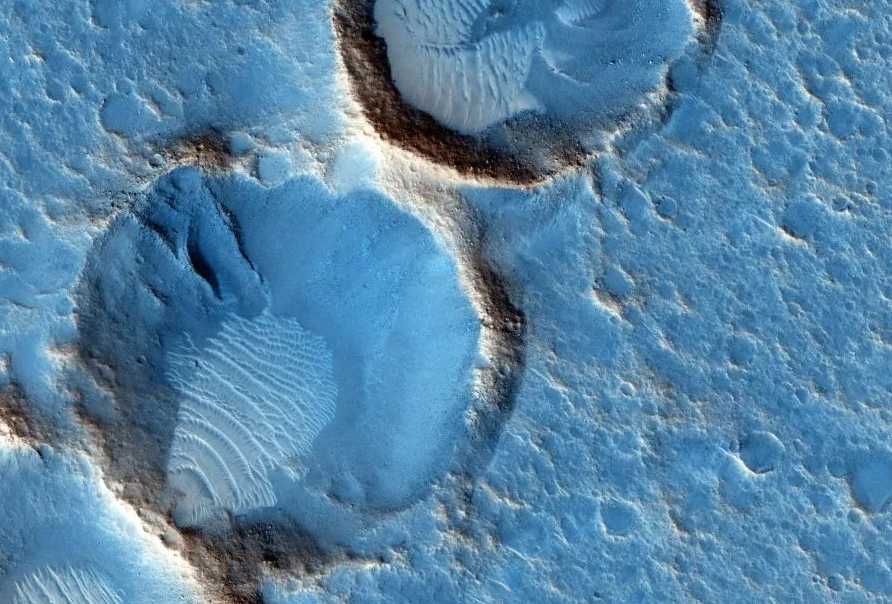
HiRISE Reveals Mars' Acidalia Planitia: Where Sci-Fi Meets Scientific RealityHiRISE Reveals Mars' Acidalia Planitia: Where Sci-Fi Meets Scientific RealityA close-up from NASA’s Mars Reconnaissance Orbiter (MRO) HiRISE camera unveils the weathered craters and aeolian features of southern Acidalia Planitia. While standard HiRISE imagery often appears in striking blue tones—a result of multispectral processing to enhance geological details—the region would likely appear gray or pale red to human eyes. Of course, no human has yet witnessed this Martian landscape firsthand—unless we count Andy Weir’s fictional NASA astronaut in The Martian.
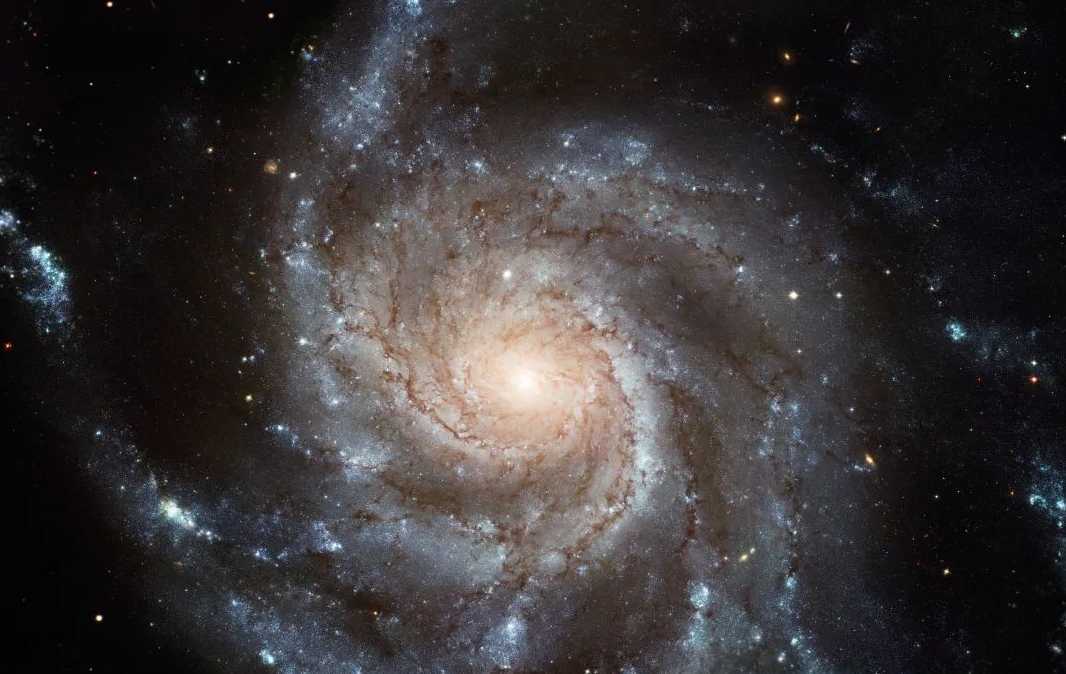
The Pinwheel Galaxy M101: A Cosmic Masterpiece Across Two CenturiesThe Pinwheel Galaxy M101: A Cosmic Masterpiece Across Two CenturiesOne of the last entries in Charles Messier’s catalog, the Pinwheel Galaxy (M101) stands as its most dazzling wonder. Spanning 170,000 light-years—nearly twice the Milky Way’s size—it first revealed its spiral secrets to 19th-century astronomer Lord Rosse through the Parsonstown Leviathan, the era’s largest telescope.
Earth: The Blue Planet's Complexity and FragilityEarth: The Blue Planet's Complexity and FragilityEarth, the third planet from the Sun, is a dynamic celestial body uniquely adapted to sustain life, with its intricate ecosystems, diverse geography, and breathable atmosphere. Spanning approximately 12,742 kilometers in diameter, this "blue planet" is characterized by vast oceans that cover 71% of its surface, interspersed with continents, islands, and dynamic geological features that shape its ever-changing landscape.
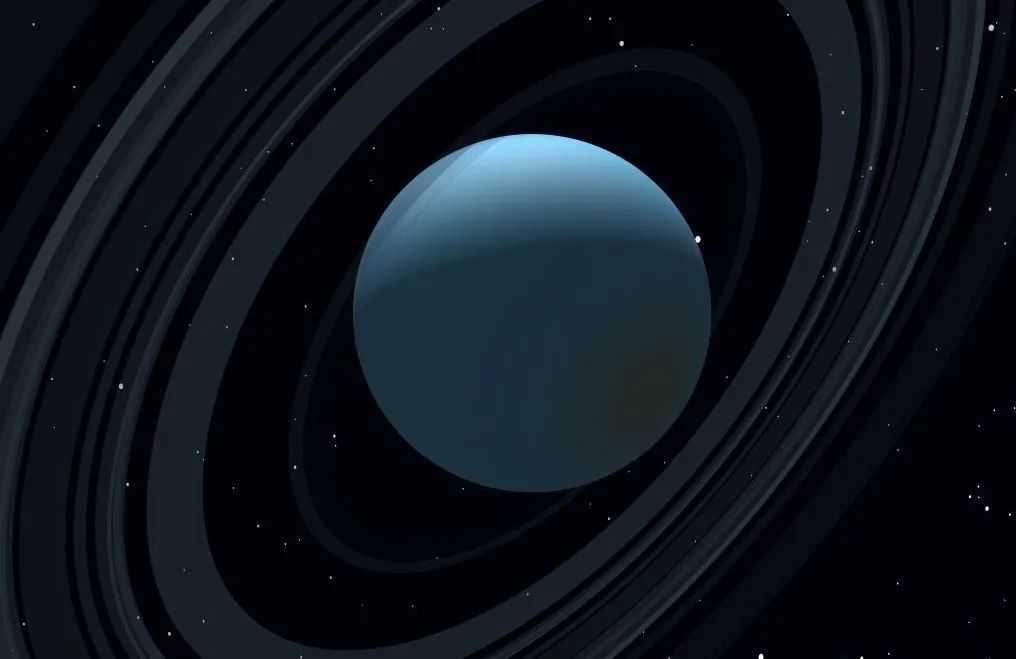
Uranus: The Celestial Ice Giant and Its Mythological LegacyUranus: The Celestial Ice Giant and Its Mythological LegacyUranus, named after the Greek god of the sky, "Ouranos," stands as one of the solar system’s most intriguing ice giants. With a radius of approximately 25,362 kilometers, it is the seventh planet from the Sun, distinguished by its pale blue hue and unique rotational axis. Unlike other planets, Uranus orbits on its side, a characteristic thought to result from a massive collision in its early history, giving it a distinct orientation in the solar system.
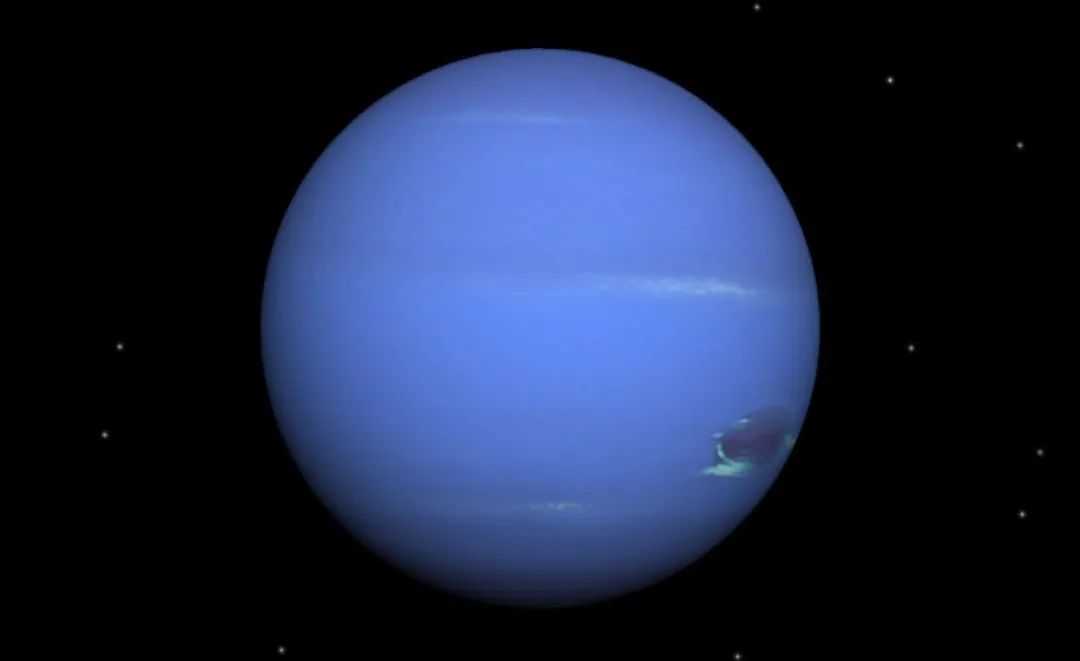
Neptune: The Mysterious Blue Giant Named After the Roman God of the SeaNeptune: The Mysterious Blue Giant Named After the Roman God of the SeaNeptune, named after the Roman god of the sea, "Neptunus," stands as the eighth and farthest major planet from the Sun. This celestial body, discovered in 1846, captivates astronomers and enthusiasts alike with its intense blue hue and powerful atmospheric dynamics, earning its reputation as a distant, majestic sentinel of the solar system.